
Hire tutors at volume without dropping the bar
Shortlist Pro runs first-round interviews for you. A job description becomes an interview plan and a scoring rubric you edit, every applicant has a real voice conversation in the language they are strongest in, and what comes back is a ranked shortlist where each score points at the moment in the transcript that produced it.
- Every candidate
- Describe the role once
- Share one linkAI at volume
- Read what came backhuman rounds
- Take the shortlist to your panel
Held to
Deployed and operated inside a managed NCR engagement
Every candidate held to the same standard, with evidence to show for it.
What it does
Scaling a tutoring operation is a recruitment problem before it is a delivery problem. The bottleneck is never the decision, it is the first round: panel hours spent on candidates who were never close, and requisitions ageing while somebody chases a free slot in a calendar.
Your job description becomes the interview
Paste or upload the role and get back a structured plan: what to probe, what good looks like, and how each answer scores. You set the interviewer’s tone, strictness and depth, weight the questions that matter most, and reorder or rewrite any of them. Your edits are what the interviewer actually uses.
A real conversation, not a form
The interviewer greets the candidate, checks who they are, and follows up on what they actually said rather than reading a fixed script. Nothing to install, no account to create.
40+ languages
Candidates answer in the language they think in, including switching mid-sentence, and are scored against one benchmark. Accent and dialect calibration is there to stop a pronunciation difference reading as a weak answer.
Scores you can argue with
The problem with AI scoring is not that it is wrong, it is that you cannot see why. Every number cites the moment in the transcript it came from, alongside the recording.
Quiet proctoring
Identity checks, camera verification and tab-switch logging, recorded without turning the interview into an examination hall.
Side-by-side comparison
Because everyone answered the same plan against the same rubric, the ranking means something. Open any score for the evidence, then take the shortlist to your panel or promote a candidate into a live round with your team.
Apply links and a careers portal
Each role gets a shareable apply link for LinkedIn, job boards and campaigns, a public careers portal, or an application widget embedded in your own careers page. Candidates read the full role and apply with their CV through your branding.
CV scoring before the interview
Applications are parsed as they arrive, with skills and experience extracted and a suitability score against your own criteria, so a high-volume intake can be filtered before anyone spends an interview slot on it.
A look inside the platform
The interview itself, what comes back from it, and the reporting underneath. The last two are our own hiring, not a demonstration account.
The interview
A real conversation, watched quietly
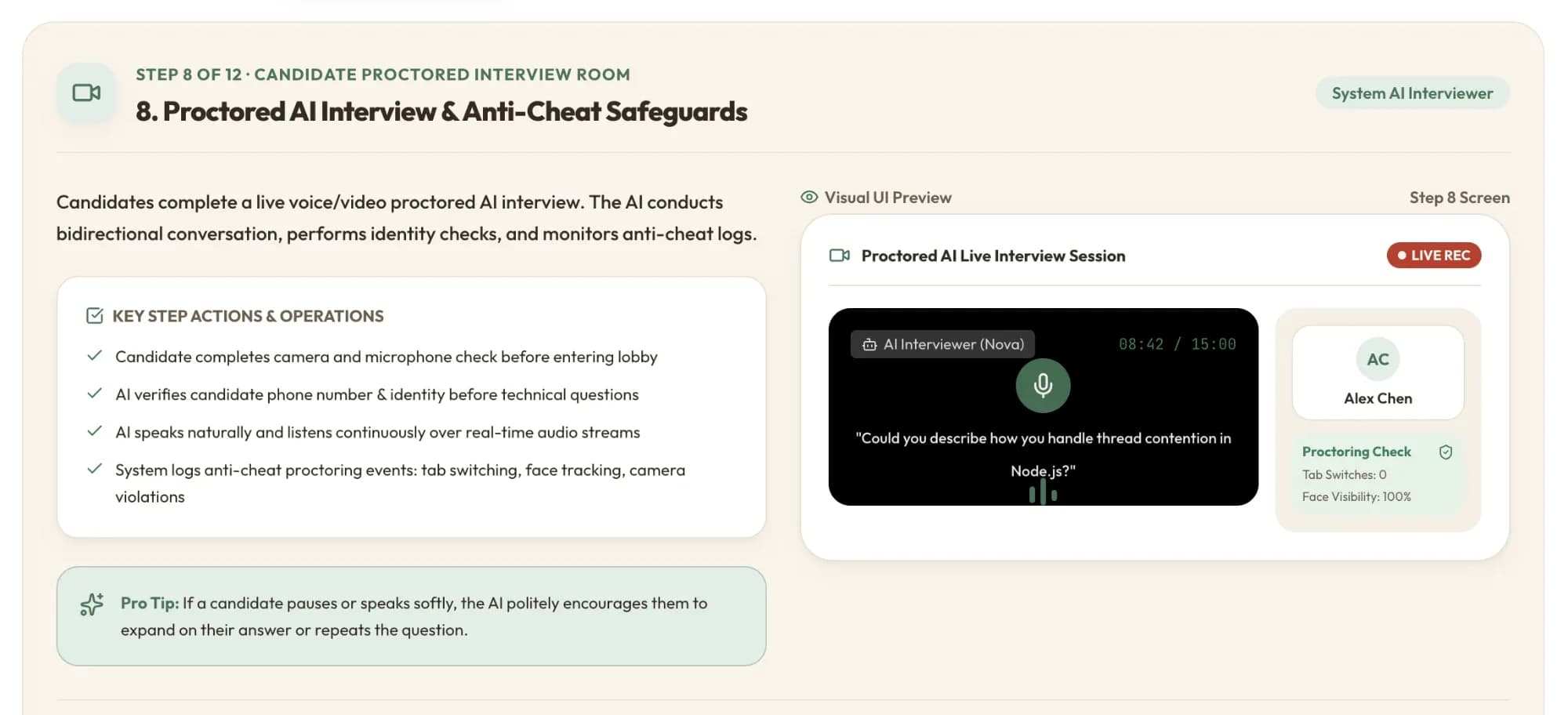
The candidate checks their camera and microphone, confirms who they are, and then talks. The interviewer listens continuously and follows the thread of an answer. Identity, tab switching and whether the candidate stayed on camera are logged in the background rather than announced.
The decision
A scorecard you can argue with
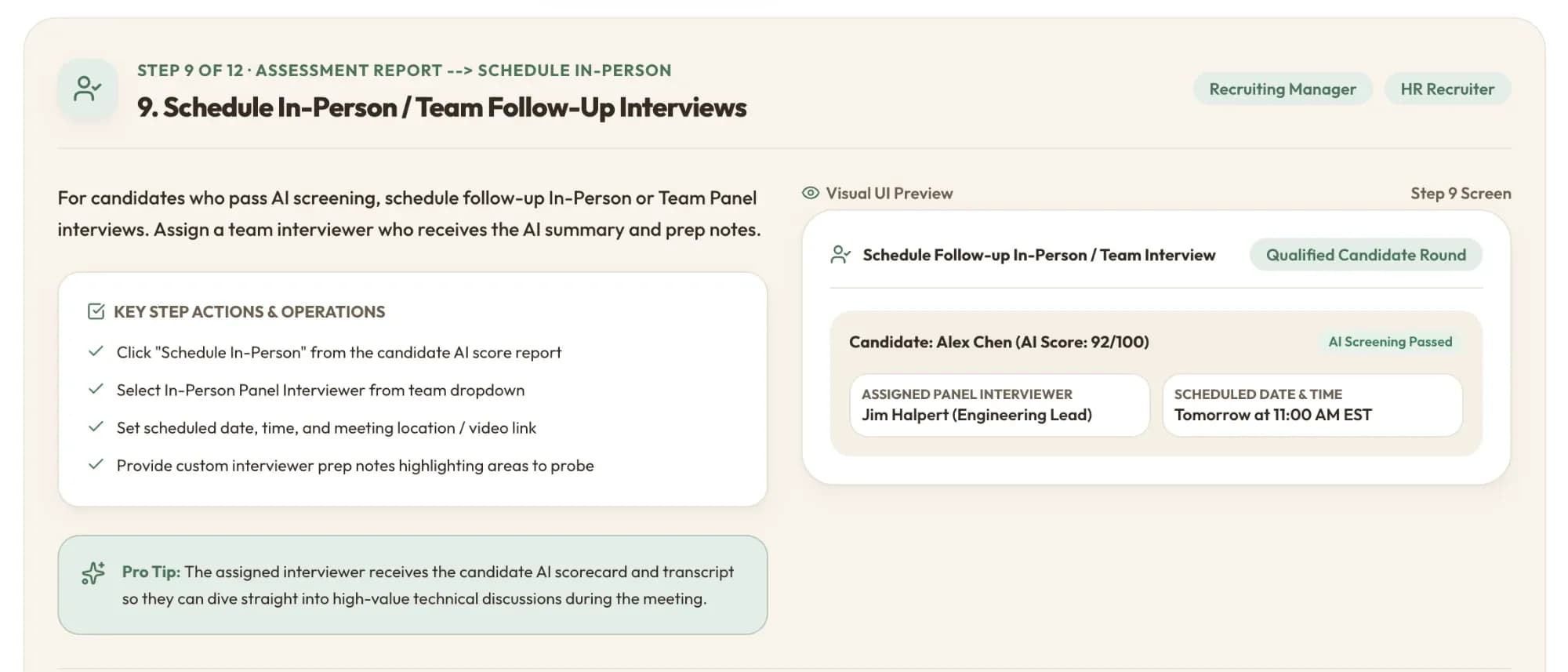
Every score cites the moment in the transcript that produced it, and the recording plays against the transcript, so a hiring manager can check the number rather than take it. The decision is recorded as hire, hold or reject by a named person, and whoever runs the next round gets the scorecard and notes on what to probe.

Our own hiring
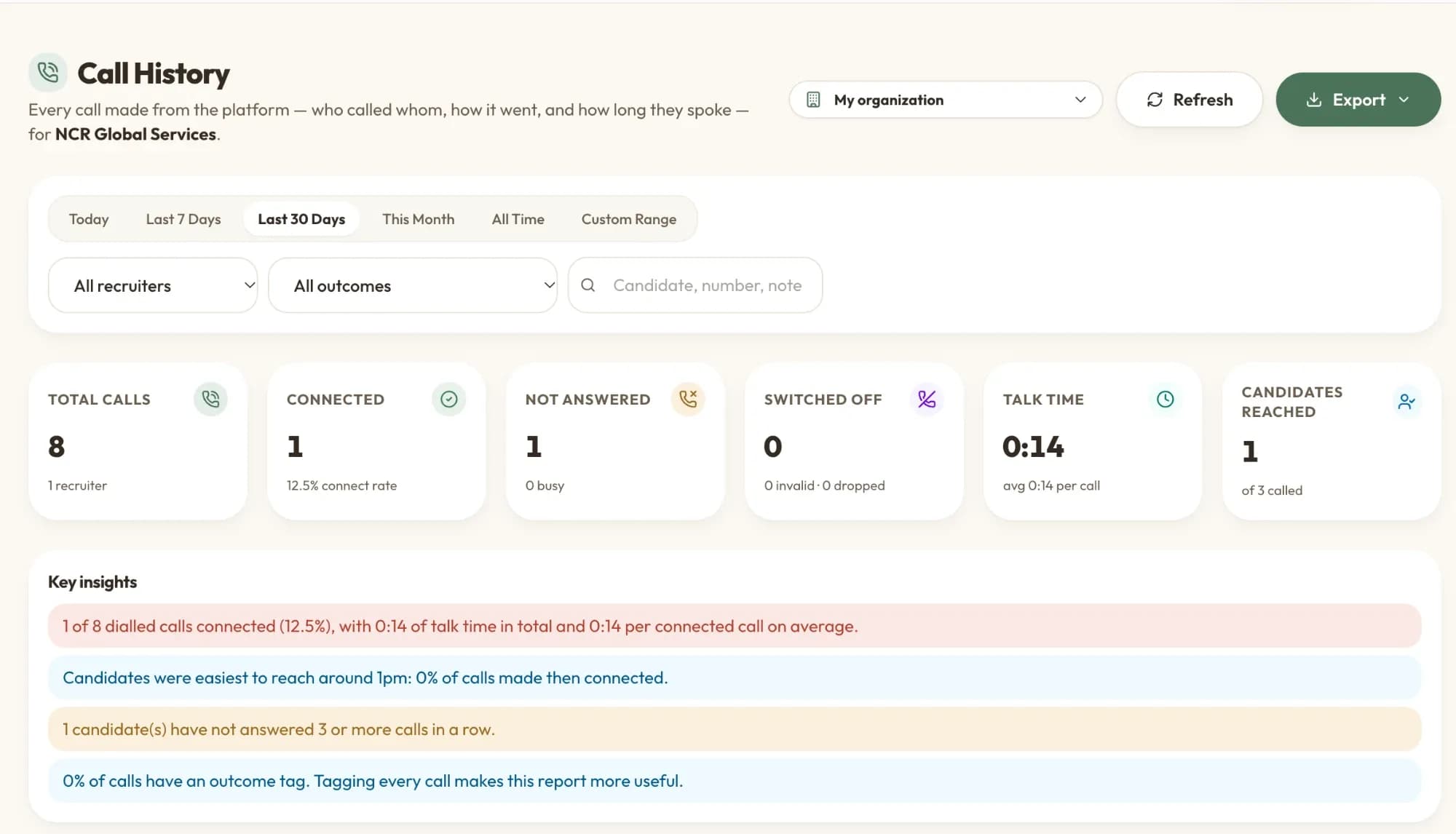
The reporting, with nothing tidied up
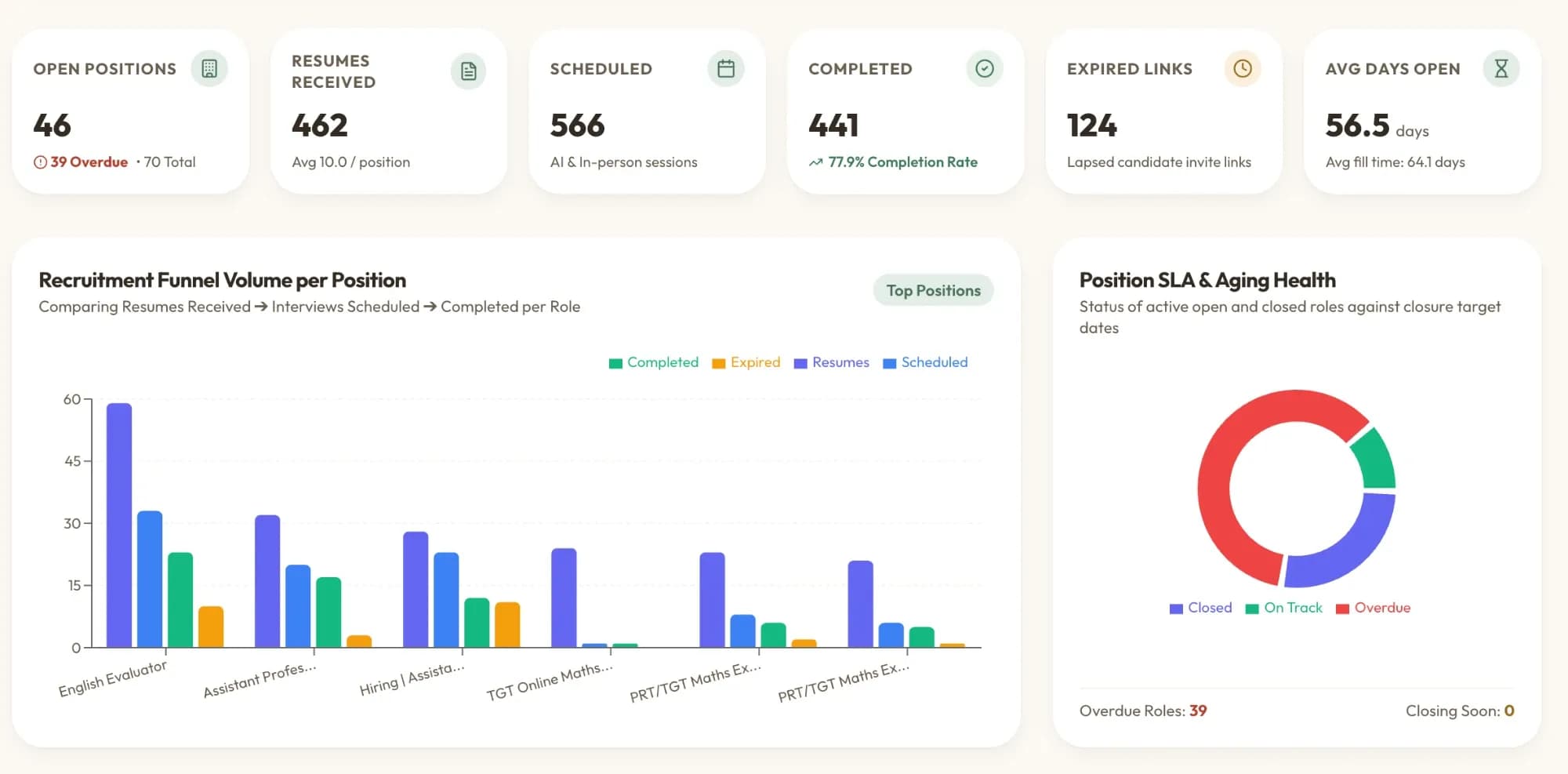
This is NCR Eduservices recruiting, not a demonstration account: real education roles, real volumes, and the overdue count left in. We show it as it is because a recruitment dashboard that only carries good news is not one you could run an operation from.
Who it is for
Tutor, marker and TA recruitment
Interview everyone who applies rather than only the ones you had hours for, and screen subject knowledge and teaching manner to one standard across every market.
Talent and HR teams
One structured interview per role, so candidates are genuinely comparable, and a defensible record behind every rejection.
Academic leads and hiring managers
Your panel only meets people who cleared a real conversation, and anyone can catch up on an interview in two minutes from the transcript.
How we deploy and operate it
We recruit on it ourselves. Across the NCR group, including NCR Eduservices, first-round hiring runs through Shortlist Pro, which is why we can ramp a tutoring operation quickly without lowering the bar.
Describe the role once
The job description becomes an interview plan and a scoring rubric. We build it with your academic team, and you edit it before anyone is interviewed.
Share one link
Candidates sit the interview whenever suits them, in any timezone, with nothing to install and no scheduling thread. The first round takes no time in anyone’s calendar, which is the round that was eating it.
Read what came back
Scores against your criteria, each citing the moment it came from, with the transcript and the recording attached.
Take the shortlist to your panel
Rank the pipeline, compare candidates on one standard, and move a strong one into a live round with your team. Whoever takes that round gets the scorecard, the transcript and prep notes on what to probe, so they start where the screen finished.
Decide, on the record
Scorecards across technical competency, communication and culture fit, with the recording playable against the transcript and the proctoring log attached. The decision is recorded as hire, hold or reject by a named person.
Close and keep the record
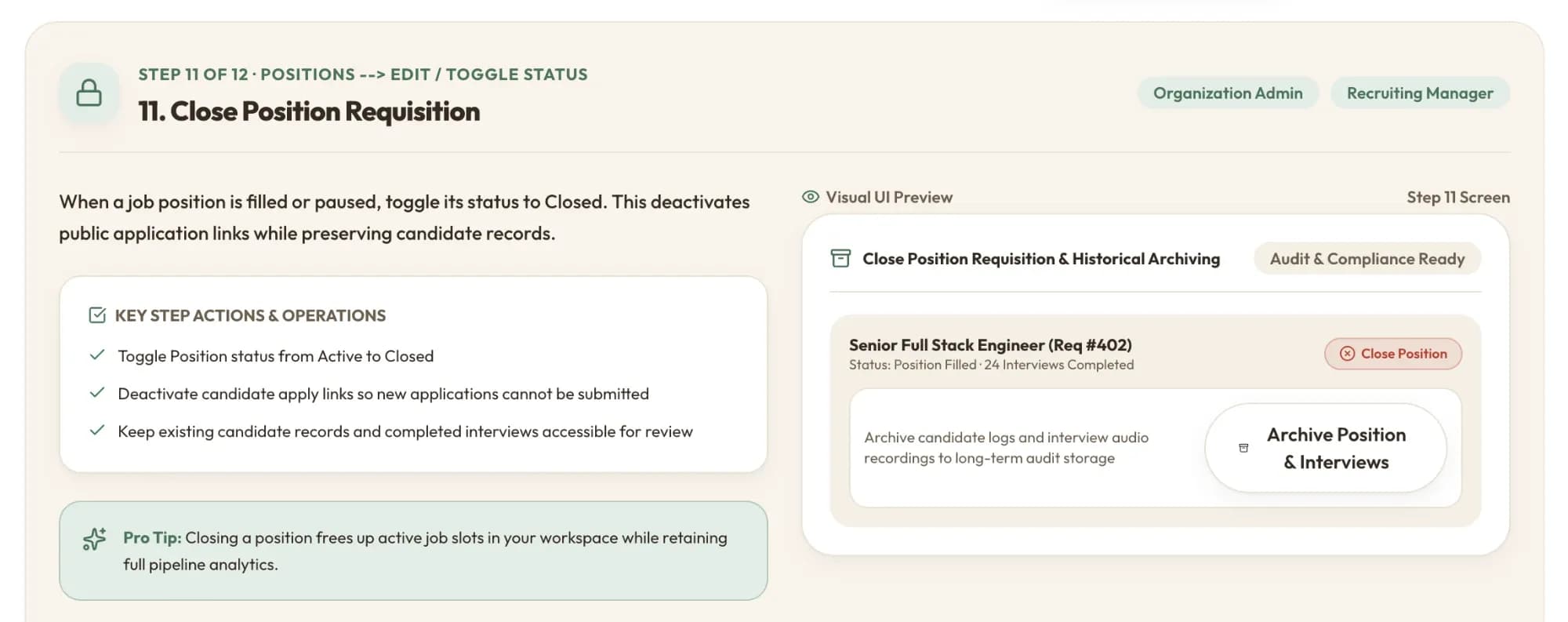
Closing a filled role deactivates its apply links so nothing new arrives, and archives the position with its interviews: available for audit, and searchable when the same role opens again.
Hiring speed is what makes a tutoring ramp possible
A five-fold capacity increase is a recruitment problem first. Running the first round on a plan you wrote, in the candidate’s own language, with the evidence attached, is how we add tutors and markers quickly without the bar moving. It is part of the engagement because recruitment speed is part of what you are buying.
- Challenge
- Operation
- Review
- Outcome
One operation, one standard
The functions this product speeds up
Academic Services
Marking that does not clear before results day, tutoring demand you cannot recruit against, and academics doing administration instead of teaching. NCR Eduservices runs online tutoring, grading services, LMS support and academic delivery quality management as one operation sized for your peak, not your average week.
See the functionResource Deployment
Demand is seasonal and your workforce capacity is not. NCR Eduservices recruits and deploys named education teams to your requirement, scaled up and down as demand moves, and carries the payroll, backup cover, training and settlement.
See the functionWhat our clients say
NCR exceeded all expectations. Tutors were well prepared, seamlessly integrated with internal staff members, and consistently demonstrated best-in-class service.
NCR Eduservices deliver what it promises and is always quick to respond if help or advice is required, a very professional outfit.
They have handled our account and our clients in a very professional, clear, and hardworking way that has built trust through their integrity.
Common questions
Can we buy Shortlist Pro on its own?
Yes. It is available directly at shortlistpro.app, including a free trial, and it is also deployed and operated inside a managed engagement where our recruitment team runs it for you. Which one makes sense depends on whether you want the tool or the hiring operation. Pricing is on the product site rather than here, so you are always reading the current one.
Does AI make the hiring decision?
No. It runs the first round and scores against a rubric you set in advance and edited yourself. Nobody is rejected automatically, people make every hiring decision, and the transcript, recording and cited evidence are there to defend it.
What stops it screening people out unfairly?
Three things. The rubric is yours and is fixed before anyone is interviewed rather than adjusted afterwards. Candidates answer in the language they are strongest in, with accent and dialect calibration so pronunciation is not mistaken for competence. And every score cites its evidence, so an unfair one is visible rather than buried in a number.
Can we use it for staff hiring, not just tutors?
Yes. The plan and rubric are generated from whichever job description you give it, so it works across teaching and non-teaching roles. We use it for both.
Can the invitations go out without us doing anything?
They can. You either schedule interviews yourself, or set a score threshold and let the platform invite every applicant who clears it, with a link that expires after a period you choose. That is how an applicant who applies at ten at night can be interviewed before anyone opens the queue in the morning. You can also leave it off and invite by hand.
Who in our team sees what?
Access is by role. An organisation administrator configures the account, a recruiting manager and HR recruiter run the pipeline, and a panel interviewer sees only the candidates assigned to them, with the scorecard and transcript they need to run a round. The record of who decided what stays attached to the candidate.
How do you handle candidate data?
Recordings, transcripts and scores are held under the same ISO 27001 controls as the rest of our delivery, with retention agreed in writing and candidate consent captured before any recording starts.
ISO 9001 & ISO 27001 Certified | Stanford Seed
See structured hiring in action
We will set up one of your real roles, run an interview in front of you, and then show you how we would run your tutor pipeline.